
What is Motorized Art Cover?
Motorized Art Cover is a powered mechanism that moves approved artwork or a decorative panel over a display when it is off and clears the screen for viewing.
How Motorized Art Cover works in a connected system
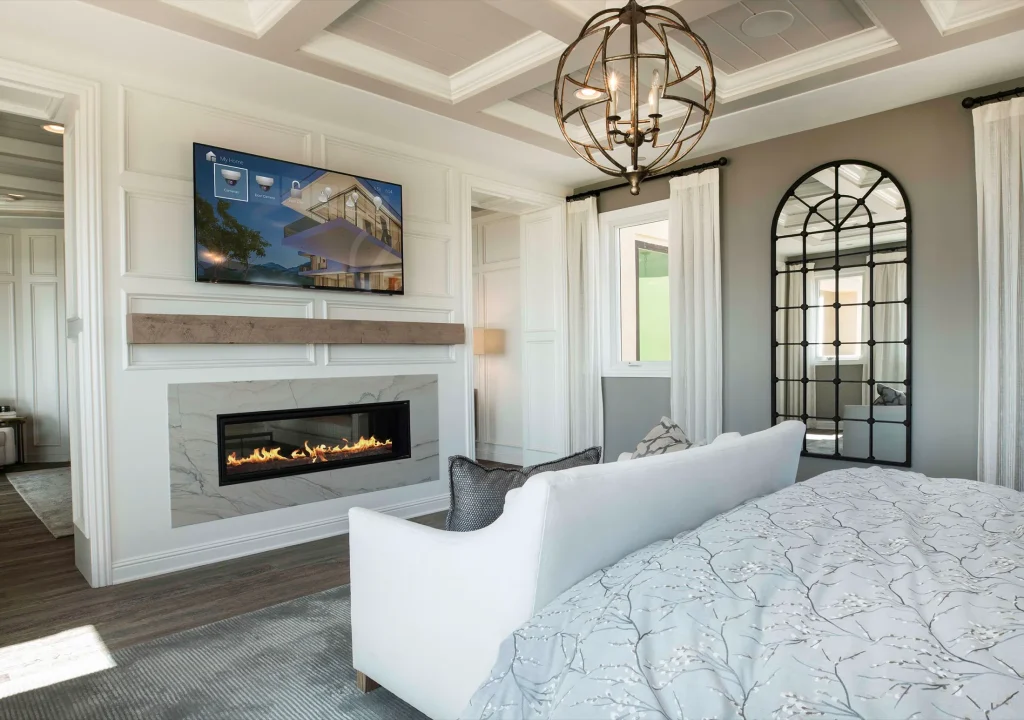
A motorized art cover lets a television wall function as an art or design feature between viewing sessions. The artwork may roll, slide, lift, or move with a framed assembly depending on the system. Planning includes display dimensions, art image area, frame depth, mechanism capacity, travel, control, power, cable routing, wall structure, and a way to reach both the screen and motor. The cover should not restrict television ventilation or interfere with sensors, speakers, cameras, or connectors. Motion needs clearances and appropriate protection around moving edges. Artwork production also matters: cropping, substrate, finish, color, and viewing distance affect whether the result reads as intentional decor rather than a technical cover.
Why Motorized Art Cover matters in Scottsdale projects
A motorized art cover can give a prominent display wall in a Scottsdale, Arizona residence a quieter off-state. Strong desert daylight can affect both art color and screen reflections, so samples should be reviewed at the installation. Stone or specialty wall finishes also require early structural and access coordination.
Planning and installation considerations
- Confirm display size, frame concept, artwork dimensions, image crop, substrate, mechanism type, travel, speed, sound, control sequence, and daily-use expectations.
- Coordinate wall structure, power, ventilation, sensor access, speakers, cameras, cable routes, clearances, moving edges, finish tolerances, and manual or service access.
- Approve full-scale proportions and art samples, then cycle-test alignment, limits, obstruction behavior, control timing, heat, and screen access after installation.
A common point of confusion
A motorized art cover is not a generic frame added after the television is mounted. Display depth, heat, wall structure, artwork, motion, controls, sensor locations, safety clearances, and future service all need a coordinated detail.
Frequently asked questions
Can any artwork be used on a motorized cover?
The mechanism and art provider determine approved materials, dimensions, weight, rolling or sliding behavior, and reproduction method. Original art may need licensed photography or scanning, color approval, cropping, and a substrate compatible with repeated movement.
Can the TV operate while the artwork is closed?
The control sequence should normally prevent viewing use behind the cover, and the installation must preserve manufacturer ventilation in all intended states. Exact behavior depends on the display and mechanism; interlocks or status feedback may be appropriate.
About this definition
Camelback Smart Homes publishes this glossary for homeowners, design professionals, builders and business teams comparing integrated technology. We separate general concepts from project-specific recommendations and check changing product or protocol details against first-party documentation when appropriate.
Actual system requirements depend on construction, wiring, network conditions, equipment versions, environmental exposure and the goals of the people using the space.