
What is Cabinet Integration?
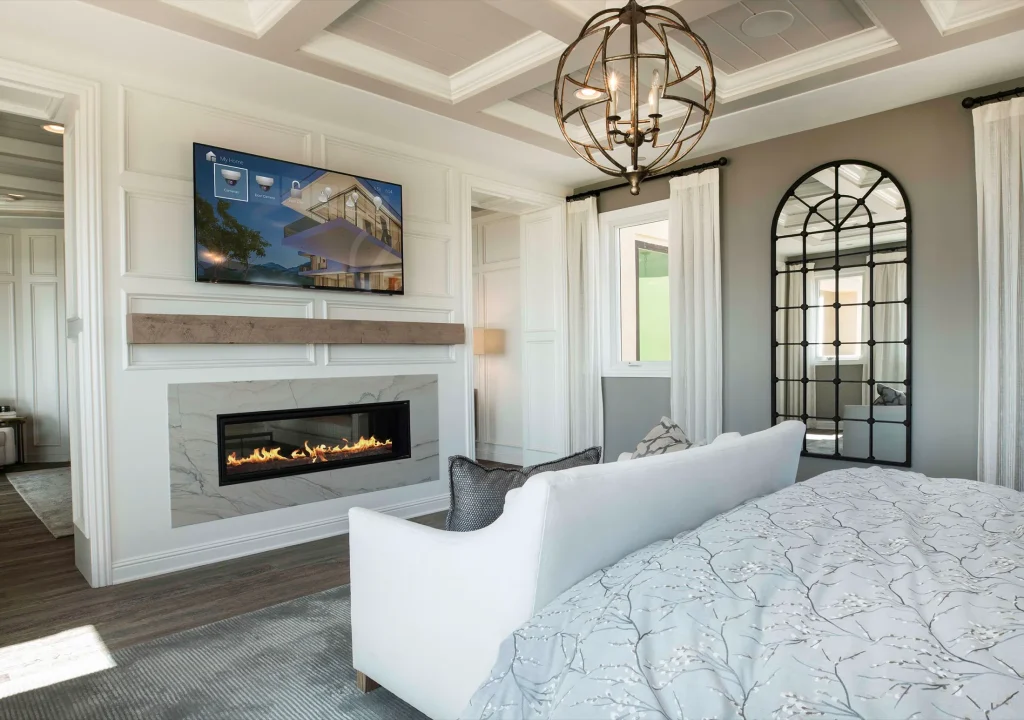
Cabinet Integration is the coordinated placement of displays, speakers, controls, source equipment, charging, cabling, ventilation, and access within custom or manufactured cabinetry.
How Cabinet Integration works in a connected system
Cabinet integration makes furniture and technology function as one assembly. A media cabinet may support a display, conceal source devices, house speakers, charge remotes, or provide local inputs. The millwork must accommodate actual equipment dimensions, connector clearance, cable bends, mount loads, heat output, door movement, and service reach. Solid doors can affect infrared, radio, Bluetooth, and Wi-Fi, while decorative grilles or fabric can alter sound and airflow. Shelves should be removable or adjustable where appropriate, and a technician needs a route to the back of components. Early shop-drawing review prevents hinges, drawers, partitions, and stone tops from occupying the same space as vents, brackets, or wiring.
Why Cabinet Integration matters in Scottsdale projects
Cabinet integration in a Scottsdale, Arizona millwork project works best when equipment dimensions, ventilation, cable access, and service clearances are resolved early. Dry desert conditions do not eliminate cabinet heat, and sunlit walls can raise local temperatures. The completed enclosure should be tested closed, under load, with nearby shades and room conditions in normal use.
Planning and installation considerations
- Provide the millworker with verified device dimensions, weights, mount patterns, vents, connectors, control paths, speaker openings, cable bends, and replacement allowances.
- Coordinate doors, hinges, drawers, shelves, frames, stone, power, network, ventilation, acoustic fabric, lighting, charging, and removable service panels in shop drawings.
- Test temperature, airflow, remote operation, wireless performance, speaker response, vibration, door clearance, cable movement, and access after final equipment is installed.
A common point of confusion
A deep cabinet is not automatically technology-ready. Unplanned partitions, solid doors, tight shelves, rear walls, blocked vents, and inaccessible outlets can make a large enclosure unusable for the equipment it was intended to hide.
Frequently asked questions
Can AV equipment sit in a closed cabinet?
It can when heat load, airflow, ambient temperature, clearances, and control signals are addressed. Some cabinets need ventilation openings or fans. Temperature should be measured during sustained operation with doors in their normal closed position.
Can speakers be installed behind cabinet doors?
Only when the door or grille provides a suitable acoustic path and avoids rattles or cavities that compromise performance. Approved acoustic fabric or perforation, sufficient open area, stable framing, and speaker-specific placement should be evaluated.
About this definition
Camelback Smart Homes publishes this glossary for homeowners, design professionals, builders and business teams comparing integrated technology. We separate general concepts from project-specific recommendations and check changing product or protocol details against first-party documentation when appropriate.
Actual system requirements depend on construction, wiring, network conditions, equipment versions, environmental exposure and the goals of the people using the space.