
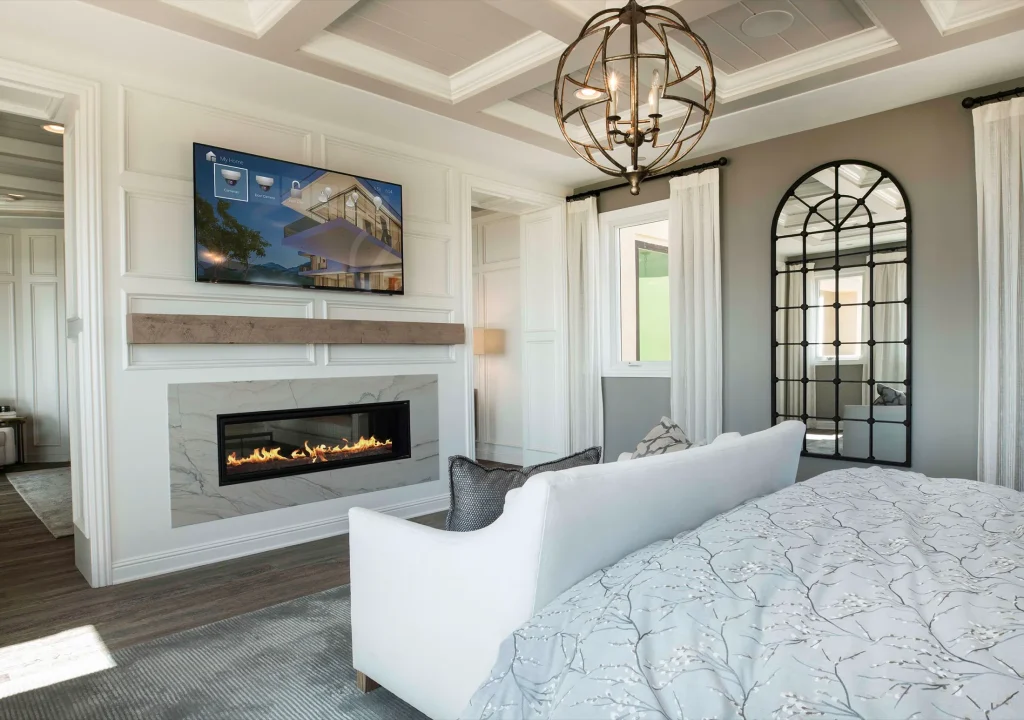
What is Lifestyle AV Design?
Lifestyle AV Design is an approach to audio-video planning that begins with people’s routines, rooms, visual priorities, and preferred interactions, then selects technology to support those experiences with minimal friction.
How Lifestyle AV Design works in a connected system
Lifestyle AV design asks what people want to do before deciding what equipment belongs in the plan. A household that hosts sports gatherings has different display, source, and seating needs from one focused on quiet music. Daily news in a bright kitchen differs from cinema in a controlled room. The designer observes movement, listener positions, daylight, décor, accessibility needs, control preferences, and tolerance for visible technology. From that brief come system zones, screen types, speaker locations, concealment choices, infrastructure, and scenes. Performance remains important, but it is evaluated within the life of the property rather than as a collection of maximum specifications.
Why Lifestyle AV Design matters in Scottsdale projects
Lifestyle AV design for a Scottsdale, Arizona home may need to connect indoor gathering areas with courtyards, patios, or pool environments. Lifestyle planning distinguishes the spaces used every day from occasional showpiece features, then accounts for sunlight, heat, outdoor exposure, and household habits. That context is more useful than assuming every luxury residence needs the same equipment list.
Planning and installation considerations
- Interview all regular users about activities, schedules, accessibility, privacy, control preferences, and frustrations with existing technology.
- Create room-by-room experience goals before selecting brands, models, speaker counts, screen sizes, or automation features.
- Document visual priorities, maintenance expectations, service access, and future changes alongside audio and video performance goals.
A common point of confusion
Lifestyle-focused design does not mean performance is secondary or vague. It gives performance a purpose, directing budget and technical effort toward the experiences people value while avoiding complexity that would rarely be used.
Frequently asked questions
How does lifestyle AV design begin?
It begins with discovery: who uses the property, what they watch or hear, where activities occur, how rooms change through the day, what should remain visible, and how people prefer to control technology. A site walk then connects those needs to physical conditions.
Can lifestyle AV design support future upgrades?
Yes. Well-planned pathways, network capacity, equipment space, documented wiring, service access, and modular choices can make future changes less disruptive. No design can guarantee compatibility with unknown products, but infrastructure can preserve reasonable options.
About this definition
Camelback Smart Homes publishes this glossary for homeowners, design professionals, builders and business teams comparing integrated technology. We separate general concepts from project-specific recommendations and check changing product or protocol details against first-party documentation when appropriate.
Actual system requirements depend on construction, wiring, network conditions, equipment versions, environmental exposure and the goals of the people using the space.