
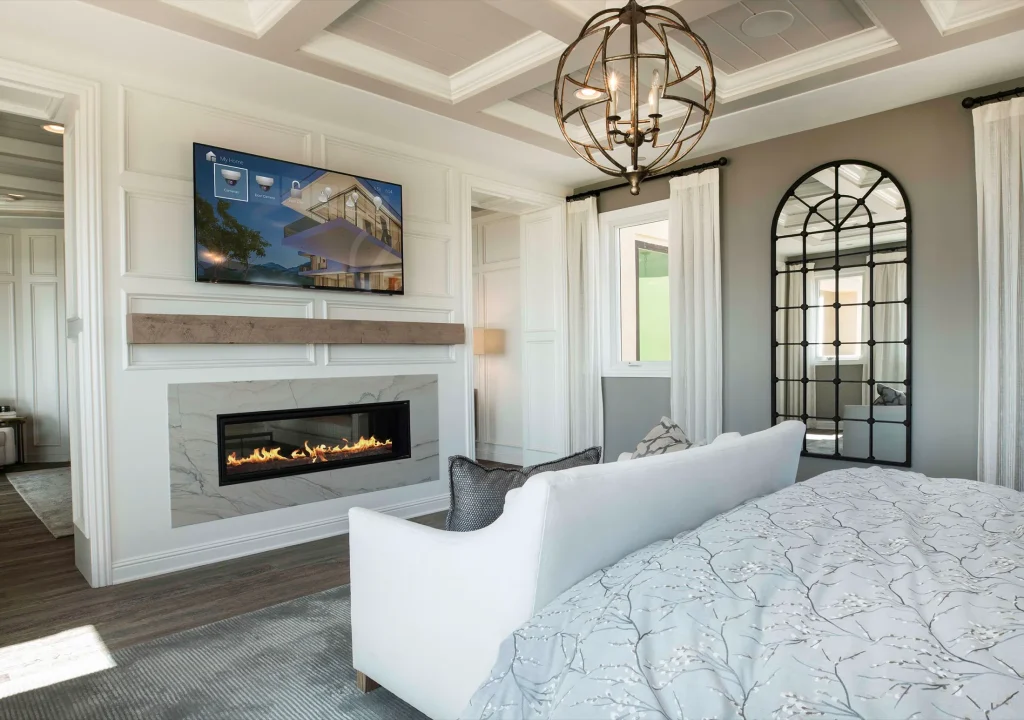

What is Home Theater?
Home Theater is a residential entertainment environment planned to present movies, television, games, and music with an appropriately sized image, enveloping sound, comfortable viewing, and controls that operate the room as one system.
How Home Theater works in a connected system
A home theater can be a purpose-built cinema or a multipurpose room with carefully integrated equipment. Its quality comes from relationships among the screen, seating, loudspeakers, subwoofers, room surfaces, ambient light, source devices, wiring, ventilation, and control. Buying premium components without coordinating those relationships can still produce poor dialogue, blocked views, distracting reflections, or cumbersome operation. A coherent design starts with audience size and use, then resolves room geometry and infrastructure before choosing hardware whose capabilities fit the space.
Why Home Theater matters in Scottsdale projects
Scottsdale homeowners may place a theater in a new custom build, an existing bonus room, or a bright shared living space. Each Arizona project calls for a different balance of light control, acoustic containment, cooling for equipment, seating capacity, and architectural integration; the label alone does not define the room.
Planning and installation considerations
- Establish the primary activities, audience size, preferred content, and whether the room must support casual daytime use as well as focused viewing.
- Coordinate screen dimensions, viewing distance, speaker geometry, seating, doors, windows, ceiling height, and equipment location before finish plans are locked.
- Provide serviceable signal paths, power, network connectivity, ventilation, lighting control, and a straightforward way to start and stop the complete system.
A common point of confusion
A large television and several speakers do not automatically make a well-designed theater. The experience depends on layout, sightlines, room interaction, calibration, control, and the match between equipment and listening positions.
Frequently asked questions
Does a home theater need a projector?
No. Large direct-view displays can be excellent, particularly in brighter or multipurpose rooms. Projection can deliver a larger cinematic image, but it adds requirements for throw distance, screen material, mounting, light control, and service access.
Should the room be designed before equipment is selected?
Room and system design should develop together. Early layout work reveals the image size, speaker locations, wiring, ventilation, and construction details the equipment must support, reducing compromises after finishes are installed.
About this definition
Camelback Smart Homes publishes this glossary for homeowners, design professionals, builders and business teams comparing integrated technology. We separate general concepts from project-specific recommendations and check changing product or protocol details against first-party documentation when appropriate.
Actual system requirements depend on construction, wiring, network conditions, equipment versions, environmental exposure and the goals of the people using the space.