
What is Private Cinema?
Private Cinema is a purpose-designed residential theater that combines cinema performance with architecture, interior finishes, comfort, and discreet technology. The term usually emphasizes a complete, tailored room rather than an equipment package.
How Private Cinema works in a connected system
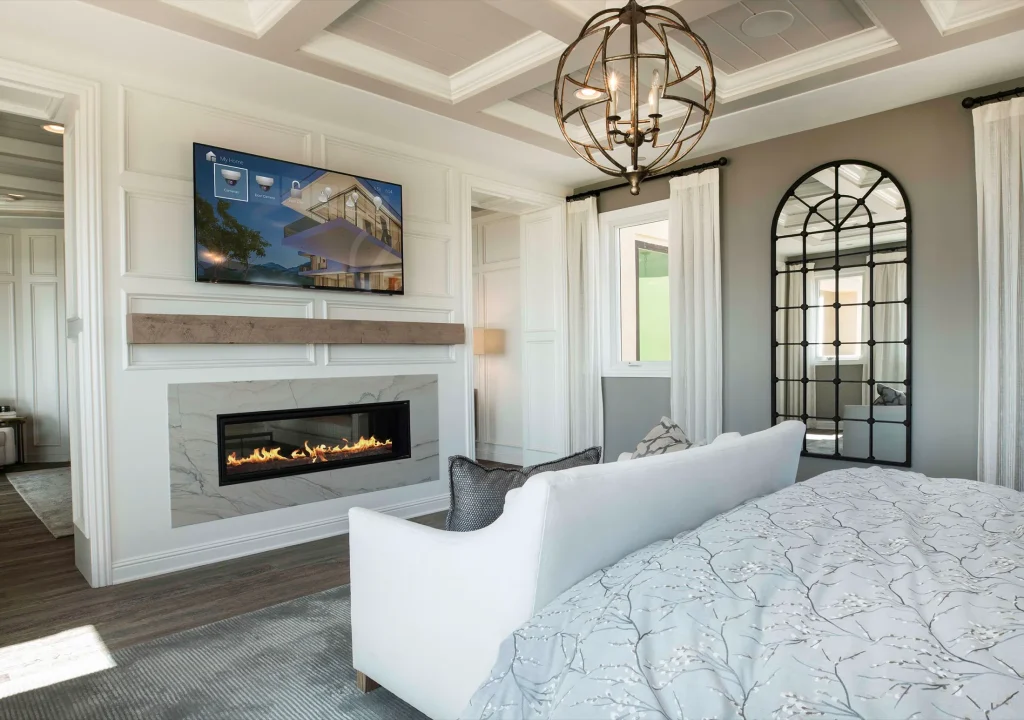
A private cinema is planned around a specific household, room, and aesthetic. The screen wall, speaker system, seating layout, lighting, acoustic finishes, entry experience, equipment support, and control interface are developed together. Technology may be visible as a design statement or concealed so the room reads as finished architecture. The word private describes residential access, not a technical certification or guaranteed performance tier. A modest room can be thoughtfully designed, while an expensive room can still underperform if sightlines, sound, light, or operation are neglected.
Why Private Cinema matters in Scottsdale projects
Scottsdale architecture ranges from contemporary glass-heavy homes to remodels with established room proportions. A private cinema should respond to that actual Arizona residence and its interior language, while protecting the acoustic and visual conditions needed for focused entertainment.
Planning and installation considerations
- Set performance, seating, aesthetic, and privacy goals together so concealment details do not compromise speaker coverage, cooling, projection, or service access.
- Mock up critical finishes, screen dimensions, seat positions, and lighting scenes where drawings alone cannot communicate scale or visual comfort.
- Create coordinated documentation for architecture, interiors, construction, acoustics, electrical, HVAC, and technology, with clear responsibility for each interface.
A common point of confusion
Private cinema is not a standardized equipment class and does not automatically mean a commercial theater copied into a house. It is a residential environment shaped around the owner, architecture, and desired level of presentation.
Frequently asked questions
Can speakers be hidden in a private cinema?
Yes, when the screen wall and finish system are designed to remain acoustically appropriate and serviceable. Concealment should follow speaker geometry and performance needs rather than forcing sound through unsuitable decorative materials.
Does a private cinema have to include multiple seating rows?
No. One carefully positioned row can be more comfortable and consistent than several compromised rows. Room dimensions, household size, accessibility, and the desired screen scale should determine the seating plan.
About this definition
Camelback Smart Homes publishes this glossary for homeowners, design professionals, builders and business teams comparing integrated technology. We separate general concepts from project-specific recommendations and check changing product or protocol details against first-party documentation when appropriate.
Actual system requirements depend on construction, wiring, network conditions, equipment versions, environmental exposure and the goals of the people using the space.