
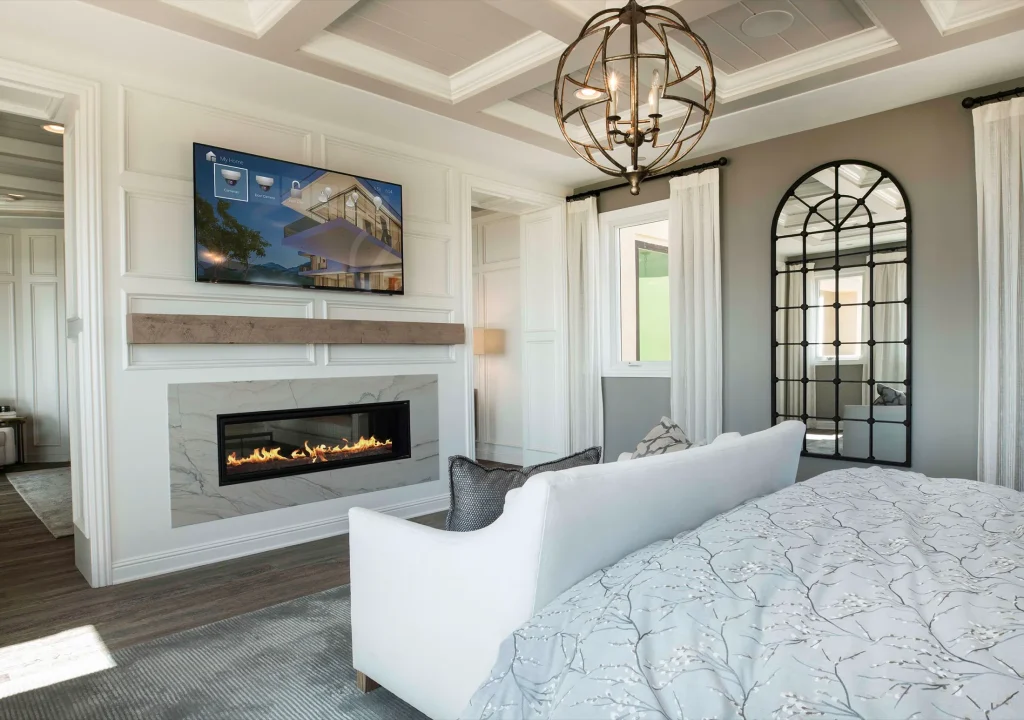

What is Smart Home?
Smart Home is a residence where connected technology can monitor conditions, exchange information, and respond to people or programmed rules. It may use a unified automation platform, several smaller ecosystems, or a mixture, so the label alone does not describe the quality of integration.
How Smart Home works in a connected system
Smart-home devices usually combine sensing, communication, processing, and an output. A thermostat measures temperature and controls HVAC calls; a keypad reports a press and starts a programmed action; a lock can report state and accept an authorized command. The home becomes more coherent when those devices share an intentional control architecture. A homeowner should be able to understand what will happen, how to override it, and where device status comes from. Reliability depends on compatible products, stable networking, sensible programming, secure accounts, and ongoing software support rather than on the number of connected products.
Why Smart Home matters in Scottsdale projects
A Scottsdale, Arizona smart-home plan may need to connect conditioned interiors, patios, detached spaces, masonry construction, and extensive glazing. Those conditions can require broader network coverage and more varied daylight responses than a compact interior-only design. The floor plan and materials should drive decisions; not every Scottsdale home has the same needs.
Planning and installation considerations
- List the outcomes the household wants before selecting brands, then separate essential functions from optional conveniences and entertainment features.
- Document device ownership, administrator accounts, subscriptions, cloud dependencies, and update policies so the system remains manageable over time.
- Keep intuitive physical controls for lighting, comfort, and access instead of making a phone the only way to perform everyday actions.
A common point of confusion
A smart home is not automatically a fully automated home. Connected products may each have an app yet remain isolated from one another. Automation begins when defined events and conditions trigger coordinated behavior; integration determines whether that behavior feels like one system or a collection of separate tools.
Frequently asked questions
What should a homeowner decide before choosing a smart-home platform?
Start with rooms, routines, current equipment, desired controls, privacy preferences, and future plans. Then compare platform support for those needs. Choosing a logo first can leave important subsystems dependent on workarounds or separate apps.
Can a smart home still have ordinary wall switches and remotes?
Yes, and well-placed physical controls are often the fastest and clearest option. Apps, voice, and automation can add flexibility, but familiar keypads, switches, and remotes provide immediate control for residents and guests.
About this definition
Camelback Smart Homes publishes this glossary for homeowners, design professionals, builders and business teams comparing integrated technology. We separate general concepts from project-specific recommendations and check changing product or protocol details against first-party documentation when appropriate.
Actual system requirements depend on construction, wiring, network conditions, equipment versions, environmental exposure and the goals of the people using the space.