
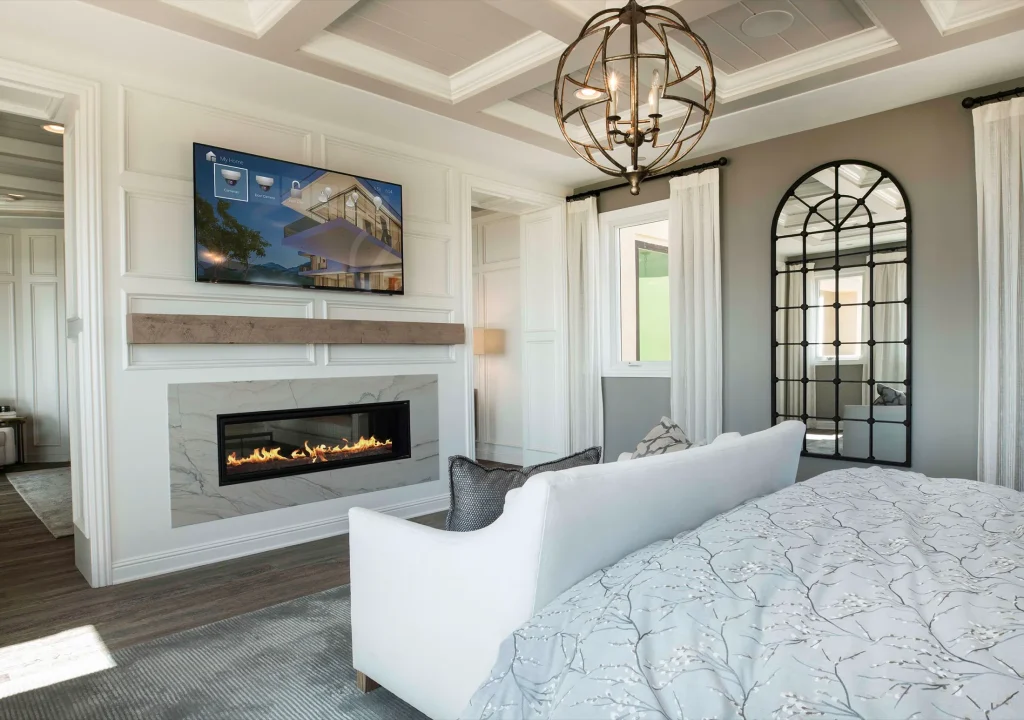

What is Home Automation?
Home Automation is the coordinated control of connected home systems so routine actions can happen from a shared interface, a schedule, a sensor, or a programmed command. The systems may include lighting, shades, climate, audio, video, access, and selected security functions.
How Home Automation works in a connected system
A home-automation platform receives an instruction, evaluates any programmed conditions, and sends commands to the appropriate subsystems. A processor may run the logic locally while apps or cloud services provide remote features. The useful part is not simply that devices are connected; it is that their behavior is designed around household routines. A single action can prepare a room for a movie, adjust several lights at sunset, or shut down nonessential equipment at bedtime. Device status, permissions, networking, and fallback controls all affect how dependable that experience feels.
Why Home Automation matters in Scottsdale projects
In Scottsdale, Arizona, home automation can coordinate shades, lighting, and comfort around strong afternoon sun without applying one generic desert preset. West-facing glass, cooling demand, outdoor areas, occupancy, and construction all influence which actions are useful and which thermostat setbacks would be too aggressive.
Planning and installation considerations
- Choose an organizing platform only after confirming which existing and planned subsystems it can control, what functions each driver exposes, and which integrations depend on a vendor cloud.
- Plan the wired network, wireless coverage, equipment location, power, low-voltage pathways, and manual controls before finishes limit practical choices.
- Define household roles, favorite routines, notification rules, and safe fallback behavior so convenience does not create confusing or unwanted actions.
A common point of confusion
Home automation is not synonymous with collecting Wi-Fi gadgets. Standalone products can be smart without sharing state or commands. An integrated system is intentionally designed so compatible components cooperate, users have consistent controls, and essential functions still have sensible local operation when an app or internet service is unavailable.
Frequently asked questions
Does home automation require replacing every existing device?
Not necessarily. Some existing equipment can be integrated through supported drivers, gateways, relays, or interfaces, while other products may expose too little control or rely on an incompatible cloud. An inventory and compatibility review should come before replacement decisions.
Will an automated home stop working if the internet goes down?
That depends on the design. Locally processed lighting, scenes, and keypad commands may continue, but remote access, voice assistants, streaming, and cloud-only devices can lose features. Ask which actions are local, which are cloud-dependent, and what manual controls remain.
About this definition
Camelback Smart Homes publishes this glossary for homeowners, design professionals, builders and business teams comparing integrated technology. We separate general concepts from project-specific recommendations and check changing product or protocol details against first-party documentation when appropriate.
Actual system requirements depend on construction, wiring, network conditions, equipment versions, environmental exposure and the goals of the people using the space.