
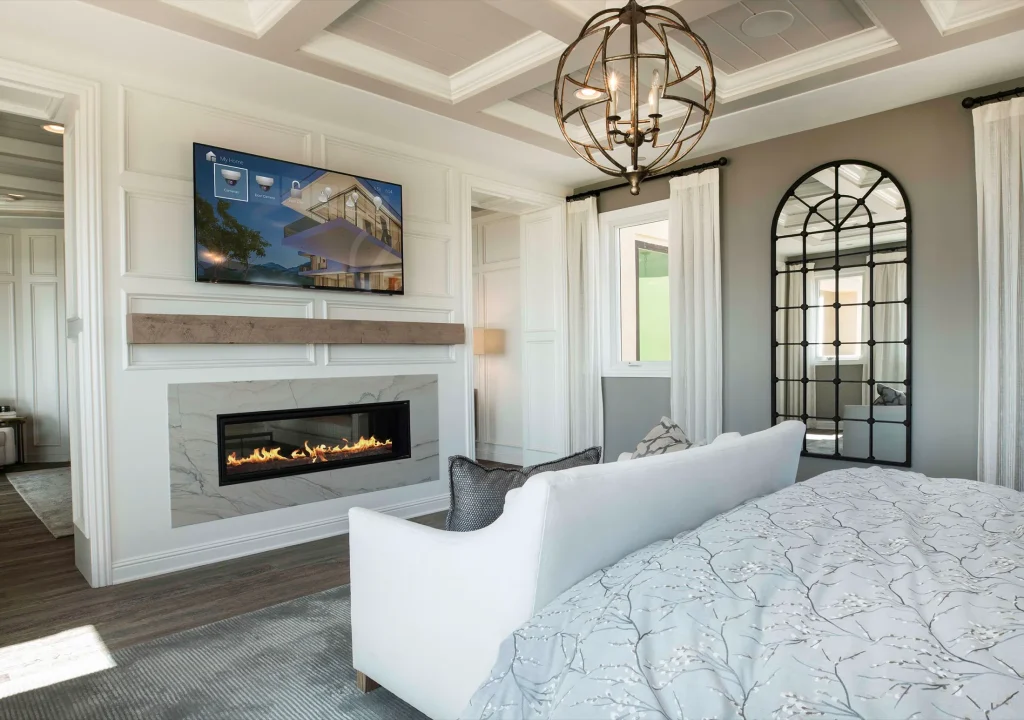

What is Tablet Control?
Tablet Control uses a tablet as a larger smart-home interface for supported systems, rooms, scenes, media, cameras, and status. The tablet may be a shared mobile device, mounted in a charging dock, or dedicated to control through a manufacturer or automation-platform app.
How Tablet Control works in a connected system
A tablet offers more screen area than a phone, which can make floor plans, camera grids, media browsing, and multi-room controls easier to understand. It still relies on an operating system, app, battery, network, and user account. A shared household tablet needs a defined charging home, restricted administrative access, and predictable wake behavior. If wall mounted, cable routing, power supply, ventilation, removal, and future model dimensions deserve the same attention as a dedicated panel. Consumer-device updates can change permissions or screen behavior without changes to the automation project.
Why Tablet Control matters in Scottsdale projects
In sunny Scottsdale, Arizona rooms, a tablet dock should avoid direct glare and heat at large windows, and outdoor use should remain within the device’s environmental limits. Measured Wi-Fi coverage matters if residents expect one tablet to move between interior spaces and covered patios.
Planning and installation considerations
- Choose shared, personal, dedicated, wall-mounted, or docked use first because that decision affects accounts, security, charging, availability, and interface scope.
- Plan continuous power without pinched or visible temporary cords, plus Wi-Fi coverage, safe mounting, heat clearance, removal, and replacement dimensions.
- Use kiosk or guided-access features when appropriate, limit sensitive settings, control notifications, and retain physical controls for immediate everyday tasks.
A common point of confusion
A consumer tablet mounted on a wall is not automatically equivalent to a purpose-built touch panel. It may sleep, display personal notifications, require battery service, change behavior after an operating-system update, or stop fitting its dock when replaced.
Frequently asked questions
Should a smart-home tablet stay plugged in all the time?
Follow the device and dock manufacturer's guidance. A purpose-designed powered mount can improve availability, but heat, charging management, battery aging, and service access still matter. Avoid improvised concealed power arrangements that are not intended for the installation.
Can one tablet control the whole home?
It can present whole-home controls when the platform and permissions allow, but one movable device may not be nearby when needed. Keypads, remotes, thermostats, and other fixed controls keep common actions available without searching for the tablet.
About this definition
Camelback Smart Homes publishes this glossary for homeowners, design professionals, builders and business teams comparing integrated technology. We separate general concepts from project-specific recommendations and check changing product or protocol details against first-party documentation when appropriate.
Actual system requirements depend on construction, wiring, network conditions, equipment versions, environmental exposure and the goals of the people using the space.