
What is Mobile App Control?
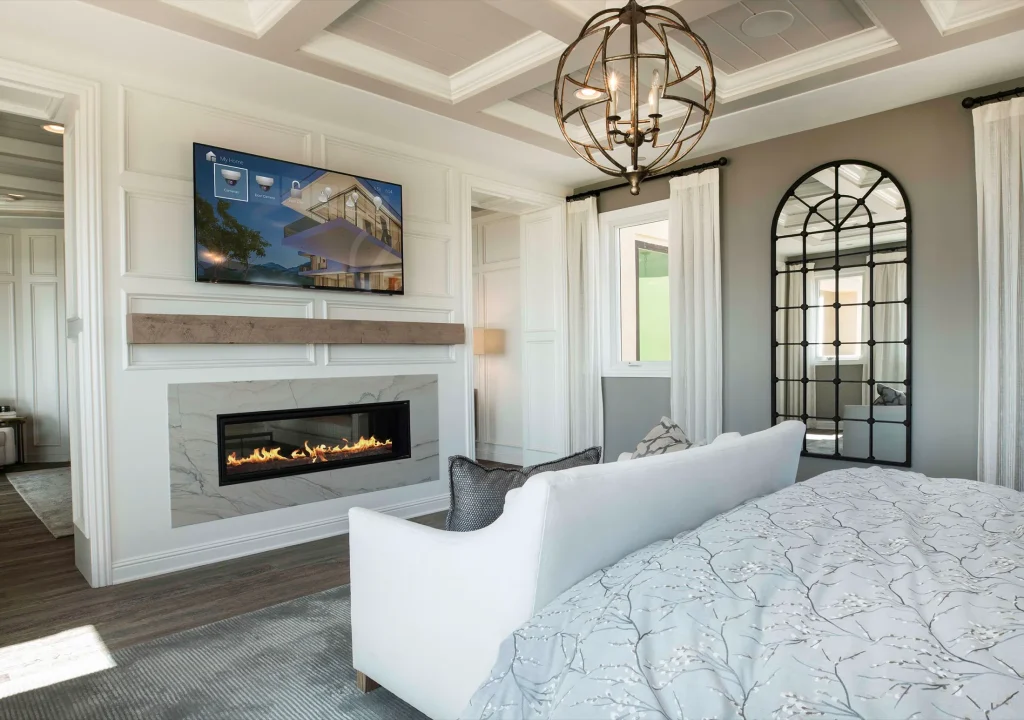
Mobile App Control is the use of a smartphone application to view status and operate supported home systems. The app connects to a device, controller, or vendor service and presents controls based on the user’s account, permissions, current location, and available integrations.
How Mobile App Control works in a connected system
On the local network, an app may communicate directly with a controller; away from home, it commonly uses an authenticated cloud or remote-access service. The same app can offer room navigation, scenes, media, cameras, comfort, notifications, and administrative settings, though availability varies by platform. A phone brings personal authentication and portability, but it also has battery, connectivity, notification, operating-system, and screen-lock constraints. Frequently used room functions should not depend entirely on finding, unlocking, and navigating a personal device.
Why Mobile App Control matters in Scottsdale projects
For Scottsdale, Arizona homeowners, mobile app control can make it easier to check supported systems while traveling or moving between indoor and outdoor spaces. Wi-Fi coverage should extend to patios only where control is expected, and cellular remote access still depends on the home’s internet, power, controller, and cloud path.
Planning and installation considerations
- Define individual users, roles, remote privileges, multifactor authentication, device-loss procedures, notifications, and whether guests receive temporary access.
- Measure Wi-Fi coverage in the actual control areas and document which app functions are local, cloud-based, subscription-dependent, or unavailable during outages.
- Keep keypads, remotes, thermostats, and other appropriate physical controls for routine functions, accessibility, guests, and phone-free operation.
A common point of confusion
App control is not automatically remote access. Some apps work only while the phone is on the home’s local network unless a remote service, account, subscription, gateway, or secure connection is configured. The interface should make local and away behavior clear.
Frequently asked questions
Can every resident have a different app-control layout?
Some platforms support profiles, favorites, permissions, or customized dashboards; others present one project structure to everyone. Even when layouts are shared, user accounts should remain separate when the platform supports them.
What should happen when a homeowner replaces a phone?
Install the current supported app, authenticate the correct account, restore required permissions, confirm multifactor methods, and test local and remote control. Remove the retired device from trusted-device or account lists when the platform provides that option.
About this definition
Camelback Smart Homes publishes this glossary for homeowners, design professionals, builders and business teams comparing integrated technology. We separate general concepts from project-specific recommendations and check changing product or protocol details against first-party documentation when appropriate.
Actual system requirements depend on construction, wiring, network conditions, equipment versions, environmental exposure and the goals of the people using the space.