
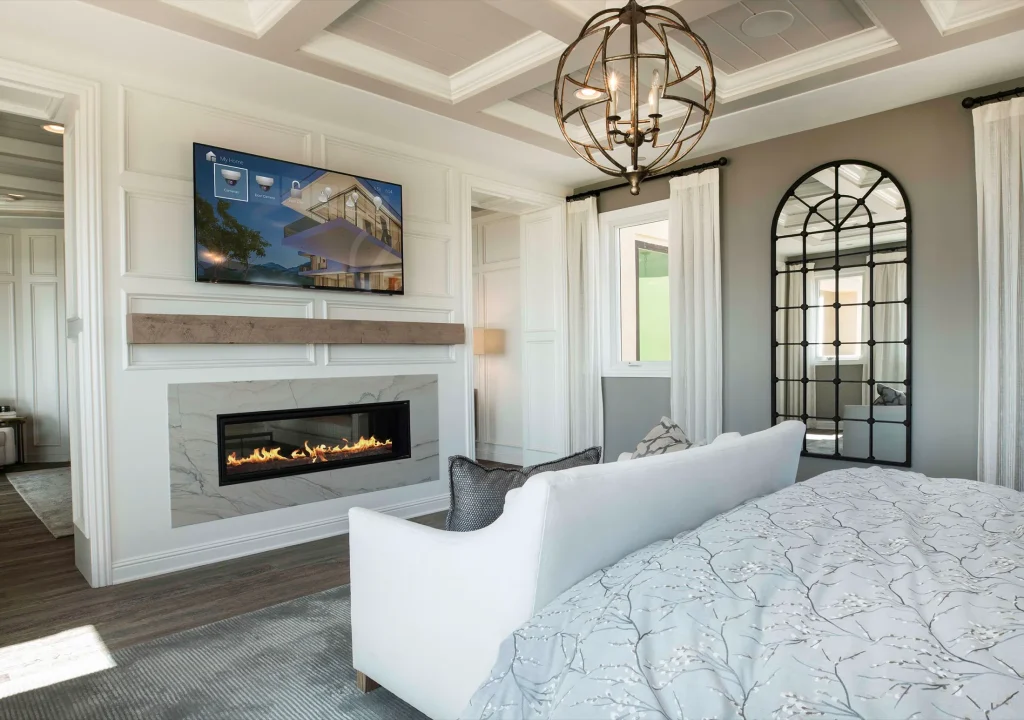

What is Architectural Speaker?
Architectural Speaker is a loudspeaker designed to become part of the building or landscape, such as an in-wall, in-ceiling, concealed, surface-integrated, or purpose-built outdoor model selected with the architecture in mind.
How Architectural Speaker works in a connected system
Architectural speaker is an umbrella term rather than one acoustic format. Some products use paintable flush grilles; others disappear behind compatible finishes, fit into narrow coves, mount within millwork, or blend into planting areas. The design objective is to resolve sound coverage and visual impact together. That requires early coordination with framing, ceiling systems, cabinetry, finish thickness, waterproofing, lighting, and landscape work. The speaker still has electrical and acoustic needs: suitable enclosure conditions, clear dispersion, amplifier compatibility, service access, and a position that supports the listening goal. Concealment should be intentional, not achieved by blocking sound with untested materials.
Why Architectural Speaker matters in Scottsdale projects
Architectural speakers can keep technology visually quiet in the contemporary interiors and outdoor living areas of Scottsdale, Arizona homes. Arizona sun, heat, dust, irrigation, and seasonal storms make environmental suitability especially important outside. The architectural solution should suit those conditions while retaining realistic access for inspection and maintenance.
Planning and installation considerations
- Bring the architect, interior designer, builder, landscape team, and technology designer together before openings, finish layers, and millwork are finalized.
- Select a concealment method that preserves the speaker’s intended dispersion and follows the manufacturer’s approved finish and enclosure requirements.
- Retain documented service access even when the visual goal is to make the device difficult to notice.
A common point of confusion
Architectural does not automatically mean fully invisible. Many excellent architectural speakers use a subtle grille, and a visible but well-aligned product can be more serviceable and predictable than a concealed approach forced into the wrong finish system.
Frequently asked questions
Are architectural speakers only for new construction?
No. Remodels and finished homes can often accommodate them, but access, wall construction, wiring paths, repair scope, and finish matching affect the options. New construction offers more freedom because blocking, enclosures, cable, and precise openings can be coordinated before surfaces are complete.
Can an architectural speaker be painted?
Many grilles are designed to accept paint, but the approved method varies. Heavy coating can clog perforations or affect fit, and drivers should never be painted. Follow the specific manufacturer's preparation instructions and keep removable parts serviceable.
About this definition
Camelback Smart Homes publishes this glossary for homeowners, design professionals, builders and business teams comparing integrated technology. We separate general concepts from project-specific recommendations and check changing product or protocol details against first-party documentation when appropriate.
Actual system requirements depend on construction, wiring, network conditions, equipment versions, environmental exposure and the goals of the people using the space.