
What is Lighting Scene?
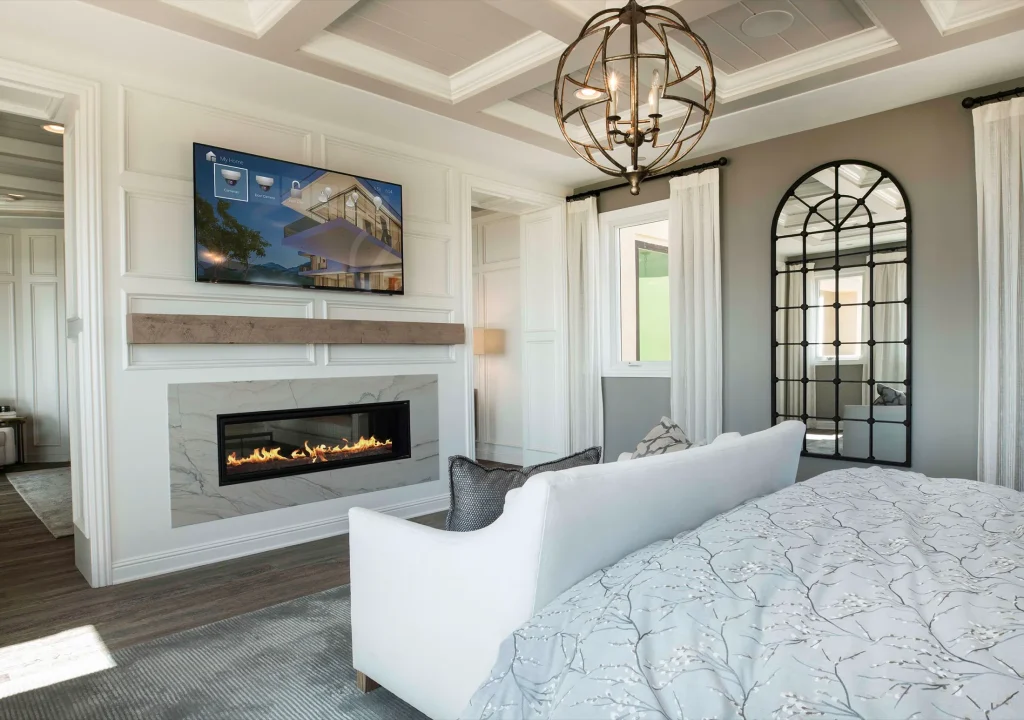
Lighting Scene is a saved group of target light levels, on/off states, and sometimes color settings that can be recalled together. It turns the lighting needed for an activity or time of day into one named command instead of several separate adjustments.
How Lighting Scene works in a connected system
When a scene is recalled, the lighting controller sends each participating zone to its programmed level using defined fade times. The scene may affect one room, a path through the home, or selected exterior zones. It can be triggered by a keypad, app, schedule, sensor, or home-automation event. Good scenes are composed from the room’s actual fixture layers: ambient, task, accent, and decorative light may need different targets. The controller should also define whether manual changes remain until the next scene, for a timed period, or until occupancy changes.
Why Lighting Scene matters in Scottsdale projects
In Scottsdale, Arizona, a room’s daylight can change dramatically between morning and late afternoon. Separate daytime and evening lighting scenes may avoid over-lighting when sun is available and reduce reflections after dark. Shade position can be coordinated, but the scene should respect manual preference and the direction each window faces.
Planning and installation considerations
- Tune scenes in the finished room with the actual fixtures, finishes, furniture, artwork, display content, and shade positions rather than relying only on design percentages.
- Use plain activity names, limit the number of choices at each keypad, and define fade times, manual overrides, sensor interaction, and room-off behavior.
- Confirm every fixture can reach the requested low level without flicker or dropout, then document scene values and any color-temperature settings.
A common point of confusion
A 50-percent dimmer command does not mean the eye perceives half as much light, and different fixtures at the same percentage may look unequal. Lighting scenes are visual compositions. Their values need adjustment in the room, not mathematical matching across unrelated loads.
Frequently asked questions
How many lighting scenes should one room have?
Enough to cover recurring activities without turning the keypad into a menu. A room might need bright, relaxed, task, entertaining, and off states, but the useful set depends on how the household lives and which layers of light are available.
Can a homeowner change scene levels later?
Many systems allow scene editing through an app or a defined save procedure, while others require programming. Changes should be intentional because the same scene may be called from several keypads, schedules, or automation routines.
About this definition
Camelback Smart Homes publishes this glossary for homeowners, design professionals, builders and business teams comparing integrated technology. We separate general concepts from project-specific recommendations and check changing product or protocol details against first-party documentation when appropriate.
Actual system requirements depend on construction, wiring, network conditions, equipment versions, environmental exposure and the goals of the people using the space.