
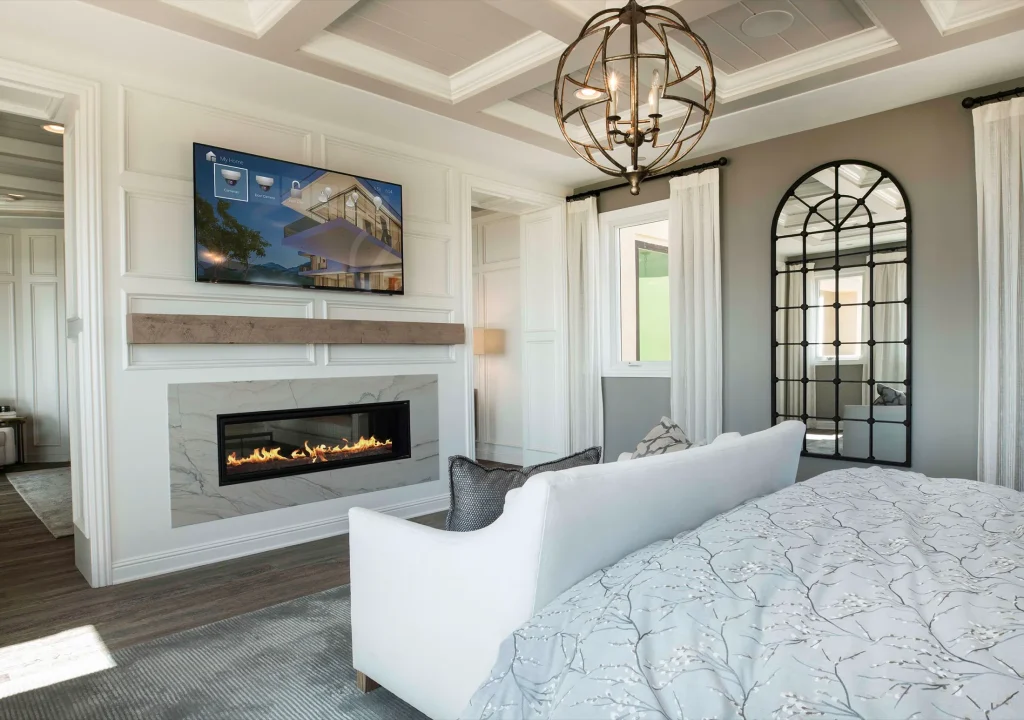
What is Video Wall?
Video Wall is a coordinated array of tiled displays or direct-view modules that operates as one large visual canvas, several independent regions, or both.
How Video Wall works in a connected system
A video wall creates scale by combining multiple image surfaces under a processor or content platform. LCD walls have physical bezels between panels, while direct-view LED systems form a larger surface from modular cabinets or tiles. The system can stretch one image across the entire canvas, arrange several sources in windows, or recall layouts for different uses. Planning includes total resolution, aspect ratio, pixel pitch or bezel width, brightness, viewing distance, source count, processing latency, calibration, structure, power, cooling, and rear or front service access. Alignment and color consistency are visible across a large surface, so installation tolerances and ongoing maintenance are part of the visual design.
Why Video Wall matters in Scottsdale projects
A video wall in Scottsdale, Arizona may face strong ambient light, large windows, and desert heat that affect brightness, reflection, ventilation, and equipment placement. A wall intended for a lobby differs from one behind glass or near an exterior opening. The actual viewing angles and daily sun path should inform the design.
Planning and installation considerations
- Establish canvas dimensions, closest and farthest viewers, required layouts, source count, native content resolution, and acceptable seams or pixel structure.
- Coordinate wall structure, mounting tolerance, power, data paths, ventilation, processor location, access method, and protection from public contact.
- Plan initial calibration, spare-component strategy, cleaning, module or panel replacement, and a method for restoring alignment after service.
A common point of confusion
A video wall is not equivalent to one ordinary screen divided into rectangles. The wall depends on mechanical alignment, processing, synchronization, color matching, cabling, service access, and content designed for the combined canvas and its visible seams or pixel structure.
Frequently asked questions
Can a video wall show several sources at once?
Yes, when the processor and source architecture support multiple windows or regions. The number, size, resolution, and arrangement of sources depend on input capacity, output canvas, processing limits, copy protection, and the control interface used to recall layouts.
How close can viewers stand to a video wall?
The comfortable distance depends on panel seams, pixel pitch, content detail, image resolution, and the viewer's task. A design for distant branding may not suit close inspection of text. Representative content should be viewed at the planned distances before selection.
About this definition
Camelback Smart Homes publishes this glossary for homeowners, design professionals, builders and business teams comparing integrated technology. We separate general concepts from project-specific recommendations and check changing product or protocol details against first-party documentation when appropriate.
Actual system requirements depend on construction, wiring, network conditions, equipment versions, environmental exposure and the goals of the people using the space.