
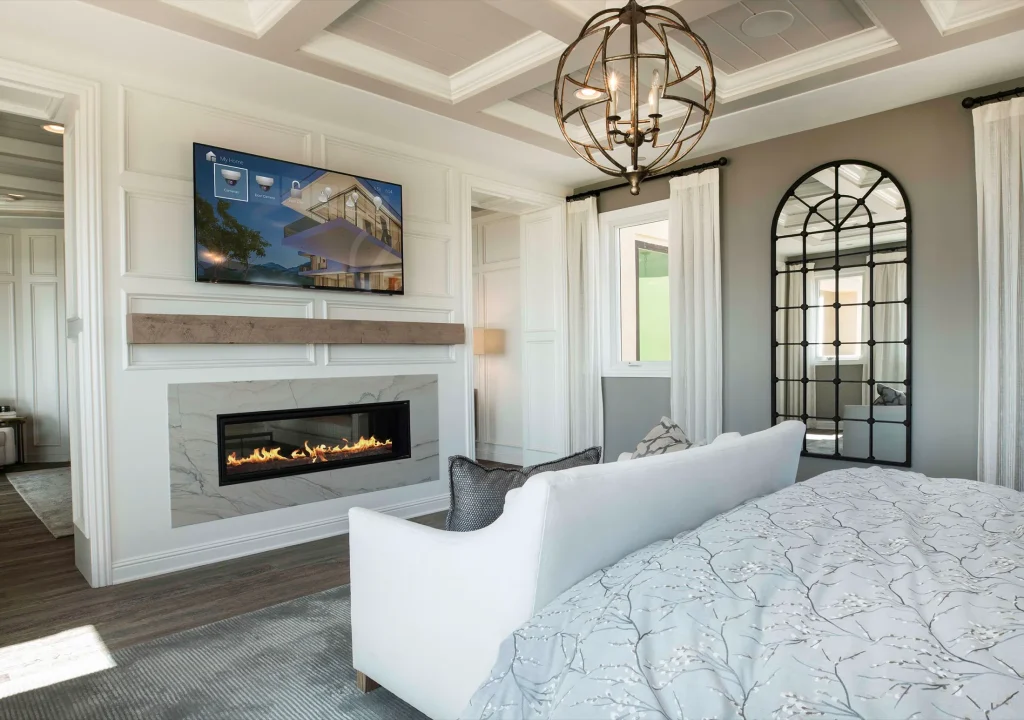
What is Retail AV?
Retail AV is audio, video, signage, communication, and control technology planned for a store or customer-facing sales environment. It can support background music, promotional displays, product demonstrations, announcements, events, staff communication, and consistent opening or closing states.
How Retail AV works in a connected system
Retail systems must serve shoppers without burdening staff. Displays need suitable brightness, orientation, content management, and mounting; music needs even coverage and appropriate level; and controls should limit accidental changes while allowing authorized adjustments. The store’s brand, traffic flow, ceiling, windows, fitting rooms, checkout, stock areas, and neighboring tenants shape design. Content rights, privacy, accessibility, network segmentation, electrical capacity, equipment security, operating hours, and support also matter. Central control can standardize states across zones, but a local manager still needs clear recovery when a source, screen, or network service fails.
Why Retail AV matters in Scottsdale projects
For a Scottsdale retail space, Arizona daylight through storefront glass can overwhelm a poorly placed display, while hard surfaces and open ceilings can reduce speech and music clarity. The system should match the lease, customer flow, staff workflow, landlord coordination, and current project requirements.
Planning and installation considerations
- Map customer sightlines, dwell points, checkout, demonstration, queue, fitting, stock, staff, and tenant-boundary zones before locating displays or loudspeakers.
- Define content ownership, licensing, update process, brand standards, brightness, volume limits, permissions, network separation, equipment security, and support response.
- Pilot opening, business-hours, event, after-hours, content-failure, network-loss, staff-override, and shutdown workflows with actual store personnel.
A common point of confusion
Retail AV is not automatically digital signage, and adding screens does not guarantee engagement or sales. The content, location, audience, operation, sound level, maintenance, and business purpose must align.
Frequently asked questions
Can retail music and announcements use the same speakers?
They often can when the system provides suitable priority, intelligibility, level control, zoning, and source management. Emergency communications are a separate life-safety matter requiring the appropriate specialized design and compliance.
Who should control retail displays and audio?
Permissions can separate daily staff adjustments from content publishing, system configuration, and support administration. The interface should expose only the functions each role needs and log important changes where supported.
About this definition
Camelback Smart Homes publishes this glossary for homeowners, design professionals, builders and business teams comparing integrated technology. We separate general concepts from project-specific recommendations and check changing product or protocol details against first-party documentation when appropriate.
Actual system requirements depend on construction, wiring, network conditions, equipment versions, environmental exposure and the goals of the people using the space.